

Kids Tasks
Designing a family goal-setting system inside Alfa Bank Kids

Overview
Kids Tasks is a feature inside Alfa Bank Kids that helps families build habits, responsibility, and financial literacy through shared goals and rewards
The challenge was not to create another “do something — get money” system. We wanted to design a tool that would help parents become mentors rather than controllers, while giving children more autonomy and ownership over their actions.
My role
Time
12 months
The Problem
Most task systems for children follow a simple pattern:
Parent creates a task → Child completes it → Child receives a reward.
While this model works, it leaves little room for initiative. Children become executors of someone else’s goals rather than active participants in the process.
Through research with parents and children, we found that motivation was not driven by rewards alone. Children wanted more independence, while parents wanted a way to encourage responsibility without turning every family interaction into a financial transaction.
This led us to a central question:
What happens if children are allowed to participate in setting their own goals?
Research highlights
Insight #1
Children were motivated not only by rewards but by having ownership over their goals. They wanted to participate in setting objectives rather than simply completing tasks assigned by adults.
Insight #2
Parents value growth over rewards. They were interested in building responsibility, habits, and independence rather than turning family interactions into financial transactions.
Insight #3
Freedom without guidance creates friction. Users needed examples and inspiration before they felt comfortable creating tasks on their own.
Core Hypothesis
If children can create their own tasks and negotiate rewards with their parents, engagement will be higher than in a traditional parent-driven task system.
Instead of positioning children as performers, we wanted to make them co-authors of the process.
Solution
We designed a collaborative task system where both parents and children could initiate new tasks.
Children could:
• Create their own goals
• Define the reward
• Send the task for approval
Parents retained control by reviewing and approving every task before activation. This created a balance between autonomy and supervision while preserving trust inside the family.
Results
The outcome was significantly different from our initial expectations.
85.1% of all tasks were created by children! 😍
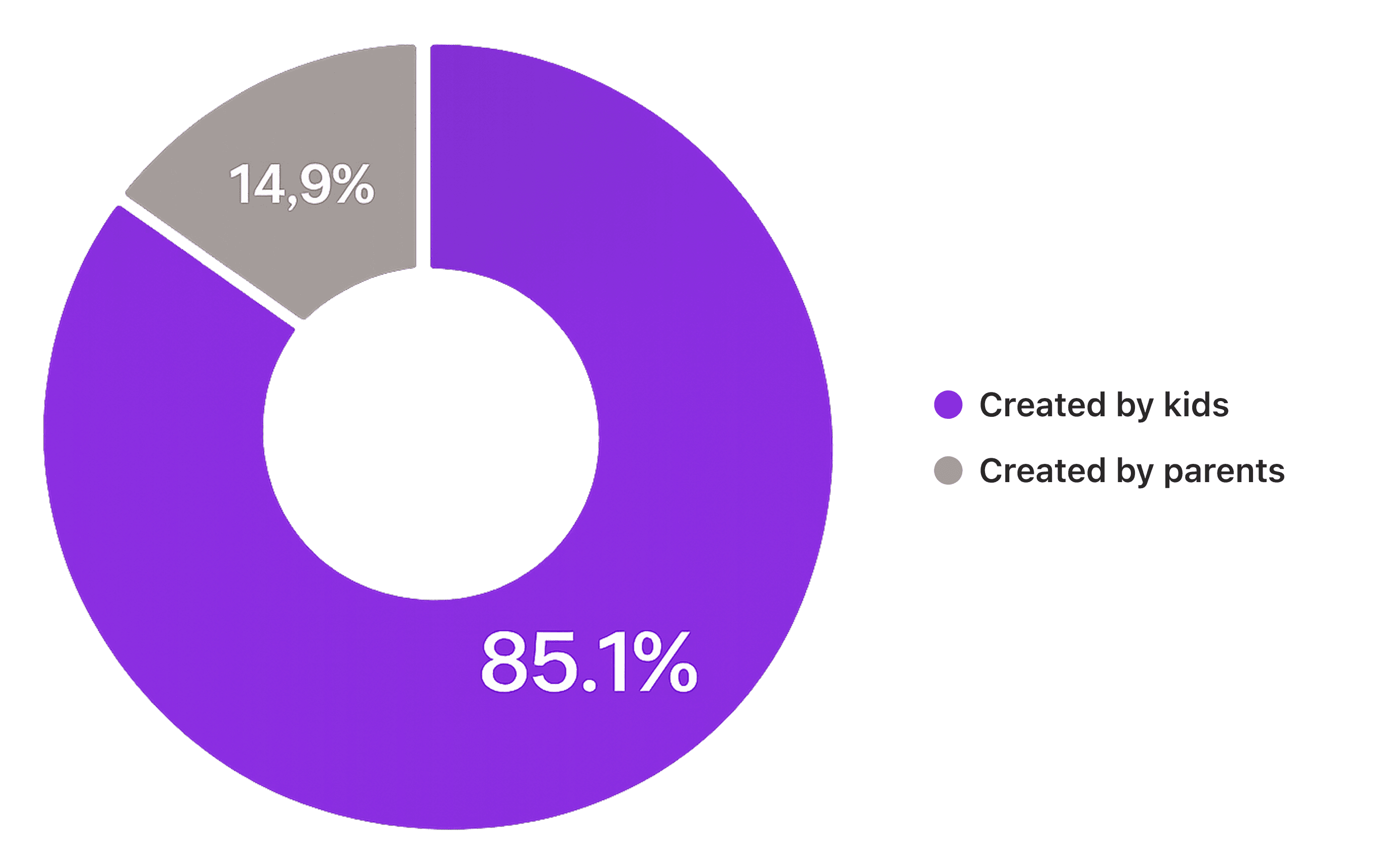
We originally expected child-created tasks to become a useful secondary scenario. Instead, they became the dominant behavior inside the product.
The results suggested that children were not only interested in completing goals but also wanted to participate in defining them.
Experiment Hypothesis
1
Experiment #1 — Non-Monetary Rewards
Hypothesis
Not every task should be tied to money. Some parents want to encourage behavior through experiences, privileges, trust, and shared activities rather than direct payments.
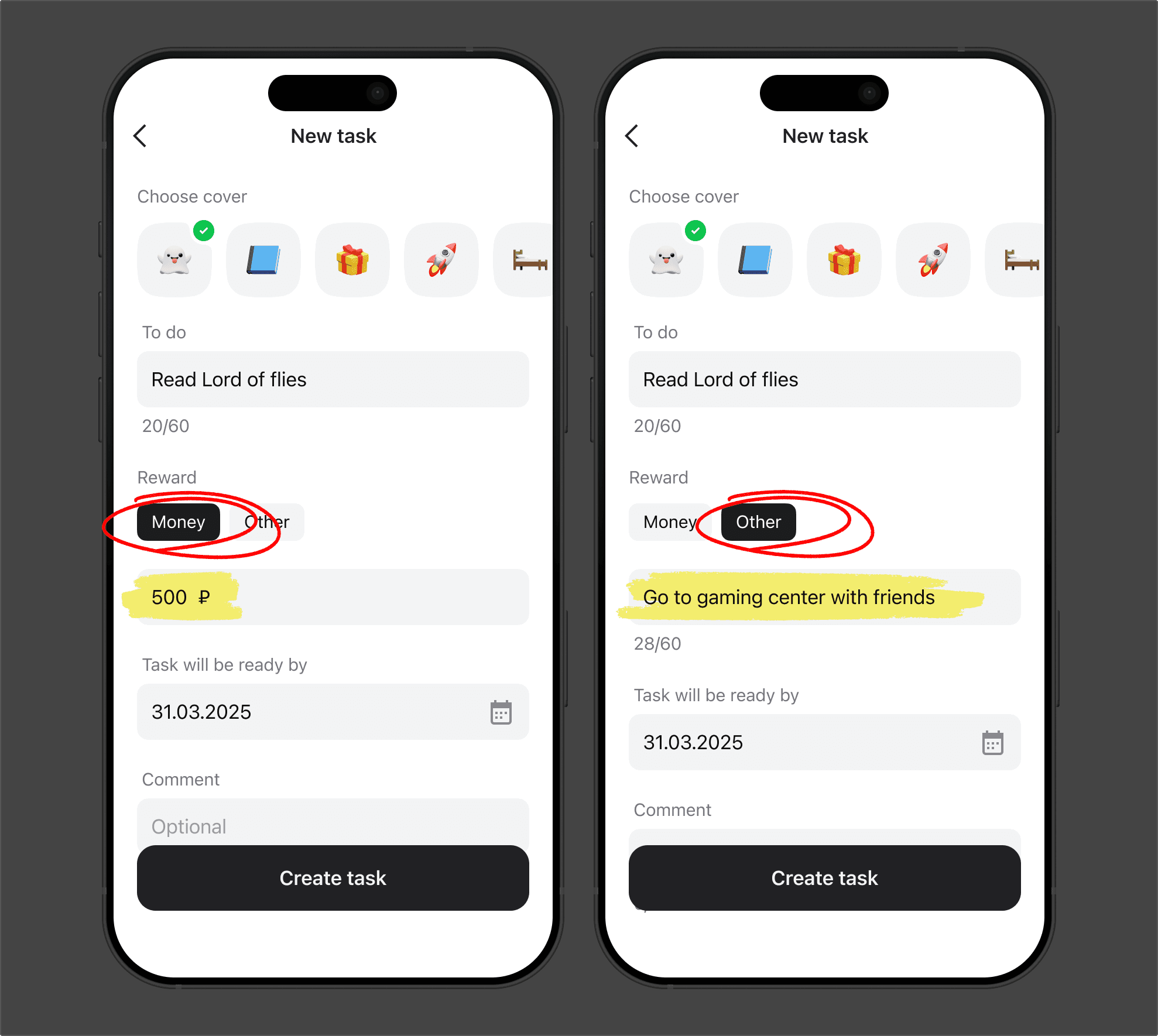
Tasks with monetary and non-monetary rewards
Solution
We introduced two reward types: monetary and custom rewards.
Families could agree on anything from extra screen time and sleepovers to trips, gaming center visits, or family activities.
Results
• 4.3% of all tasks used non-monetary rewards
• 12.4% completion rate
• Overall completion rate: 10.7%

Takeaway
While not a mainstream scenario, non-monetary rewards proved to be a meaningful alternative for families who preferred agreements over transactions.
2
Experiment #2 — Task Ideas
Hypothesis
A blank state creates friction. Many families need inspiration before creating their first task. However, we did not want to provide generic task suggestions. We wanted task ideas to serve a second purpose: helping children discover financial concepts and learn how to use the features of their Kids banking app.
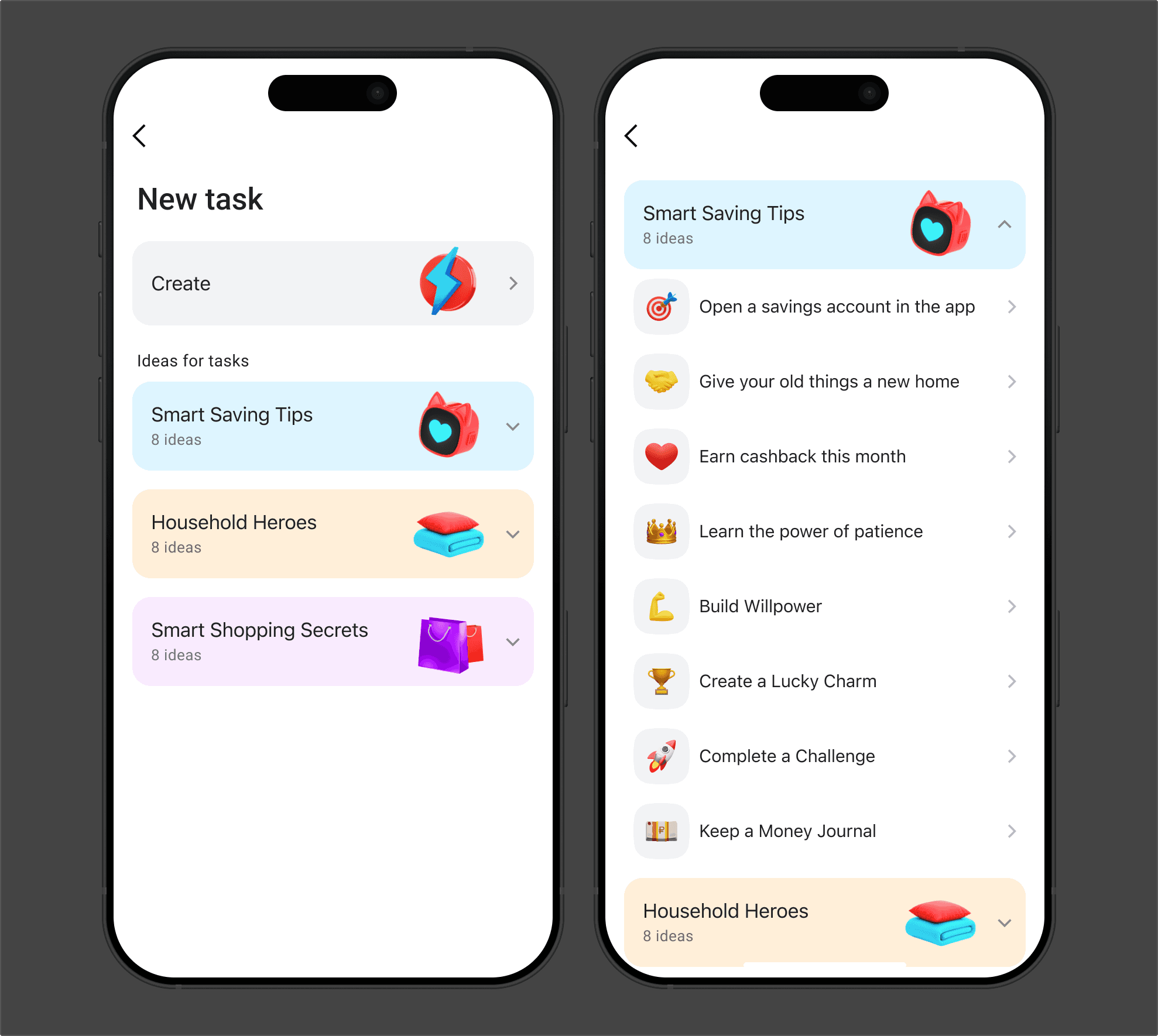
'Create task' screen
Solution
We introduced Task Ideas — editable templates that could be used directly or customized.
The ideas were carefully designed around financial literacy and real product behaviors. They encouraged children to explore features such as savings accounts, cashback categories, spending habits, and personal financial goals.
Rather than prescribing actions, the ideas acted as both onboarding guidance and educational prompts, helping children understand how money works while interacting with the product.
Results
~40% of all created tasks originated from task ideas
The feature successfully reduced the friction of creating the first task while preserving users’ freedom to customize goals and rewards.
3
Experiment #3 — Monthly Achievements
Hypothesis
Recognizing progress can be as motivating as rewards. We believed that a monthly achievements experience would increase engagement by helping children reflect on their accomplishments and giving them something fun and shareable at the end of each month.
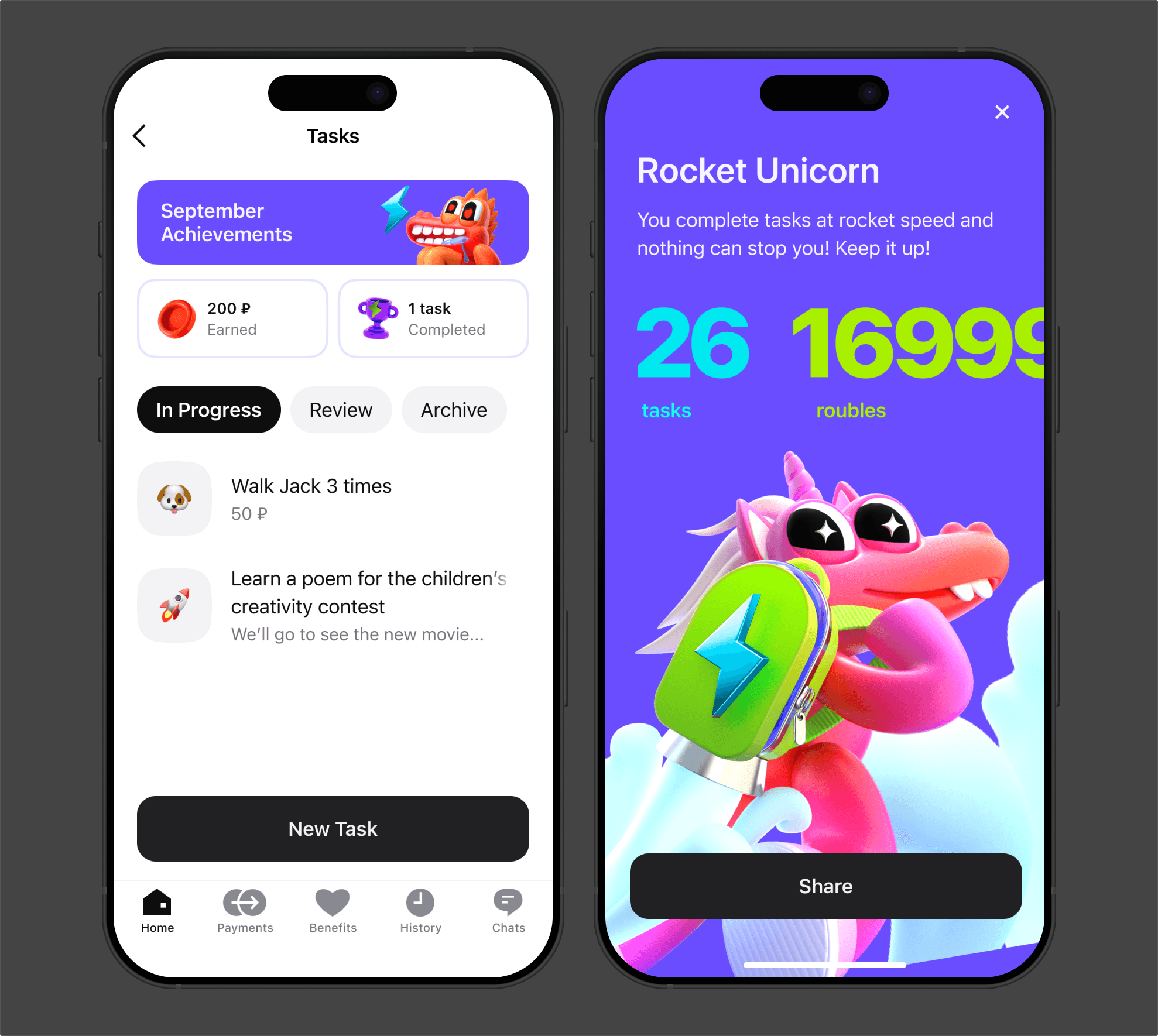
Monthly achievements sharing screen with animated hero
Solution
Instead of creating a traditional statistics screen, we designed a collection of achievement characters that reflected each child’s activity during the month.
The character a child received depended on factors such as completed tasks, earned rewards, and overall engagement with the feature. Different combinations of behaviors resulted in different achievement heroes, each with its own visual identity and name.
Importantly, every child received a character, even if they had not completed a single task. For inactive users, we created a sleeping dinosaur character. While technically representing zero progress, it still produced an emotional reaction and often felt humorous rather than punitive.
The goal was to celebrate participation rather than judge performance. Children could view their monthly character, compare it with previous months, and share it with friends and family.
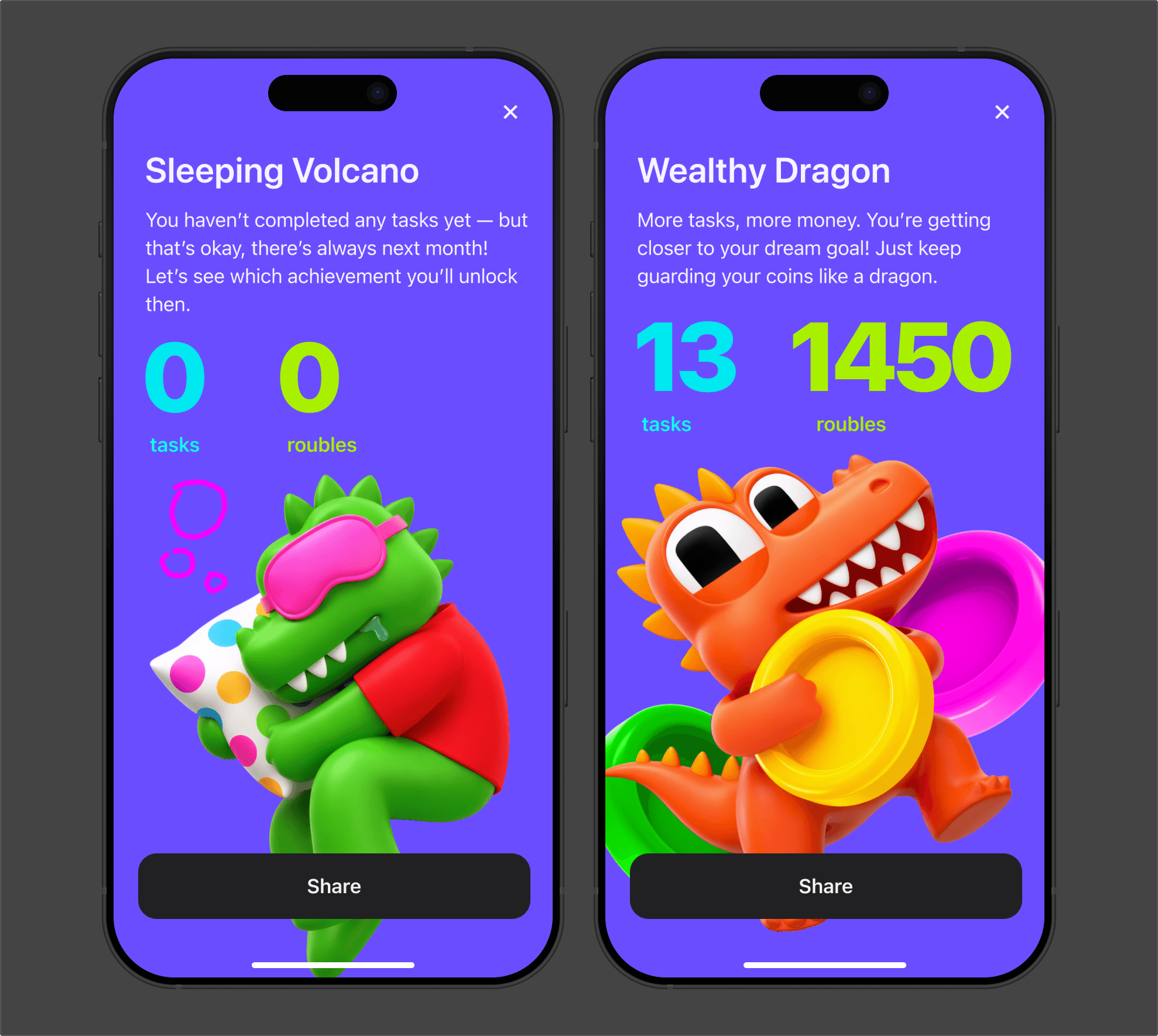
More task heroes
Takeaway
Personalized achievement characters transformed monthly statistics into something emotionally meaningful. Even users with little or no activity still received a memorable outcome, helping the feature remain engaging without relying on negative reinforcement.